Photo courtesy of Wikimedia Commons
BY: SAWYER BURKE; NEWS EDITOR
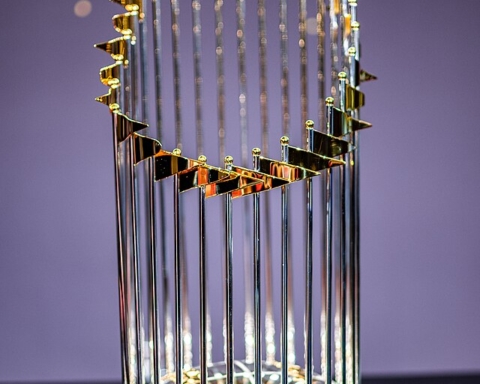
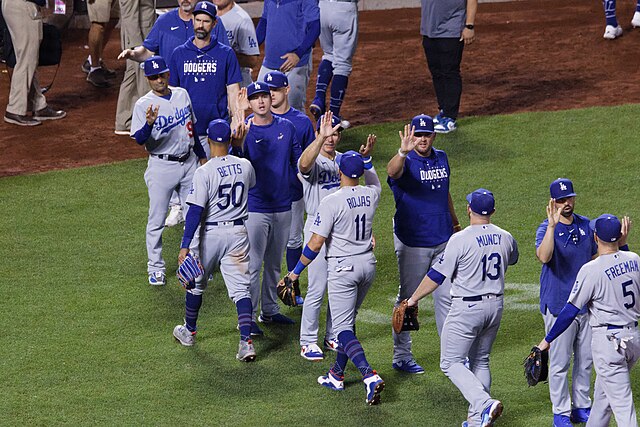
As the 2025 Major League Baseball season comes to a close, the Los Angeles Dodgers return home with their second consecutive World Series title—an achievement that reignites debate over how much teams should be allowed to spend. The Dodgers currently hold, arguably, the best player in baseball: Shohei Ohtani. For $700 million, Los Angeles secured a two-way phenomenon who dominates both on the mound and at the plate. After joining the Dodgers from the Los Angeles Angels, Ohtani finally captured his first World Series ring during the 2024 season. The team also invested roughly $325 million in Yoshinobu Yamamoto, another ace right-hander who was integral to their World Series run.
With player contracts reaching hundreds of millions of dollars, the question remains: can smaller-market teams realistically compete for a championship when one franchise can afford to pay a single player more than another team’s entire roster?
The MLB Competitive Balance Tax (CBT), or luxury tax, is a system designed to discourage teams from spending excessive amounts of money. Unlike the NFL or NBA, the MLB does not have a hard salary cap that limits how much teams can spend. Instead, it implements a “soft” cap that taxes teams who exceed the threshold of their payroll. Each year, the MLB sets a specific limit for spending. For the 2025 season, the limit was set at $241 million. So, if teams exceed that amount, they will be taxed. For first time offenders, teams pay a 20% tax on the amount they exceeded the threshold by. And the rate only increases by consecutive years.
On the opposite side of that, some teams will choose to spend below the threshold. Because of this, their tax rate will reset for the year as if they were first time offenders.
In his article MLB Labor: How Fight Over Salary Cap Will Shape Negotiations, ESPN MLB Insider Jeff Passan says, “Because the Dodgers have exceeded every threshold of the league’s luxury tax–which kicks in at $241 million and includes penalties for repeat offenders–they owe an additional $167.4 million.”
The goal of the CBT is to promote a “level playing field” by making it costly for large-market teams to overspend. Still, many wealthy organizations—such as the Dodgers and Yankees—are willing to pay the tax as the price of fostering elite rosters, while smaller-market teams often choose to stay under the threshold to avoid financial strain.
The Dodgers are a prime example of how big spending can translate over to the wins column; however, the New York Mets are an exception to that trend.
According to the article, Mets Topped Spending Again in ‘24: Total MLB Payouts Pass $5.1B, “The Mets led the major leagues in spending for the third straight season in 2024 and have totaled $1.36 billion in payroll and luxury tax over four years.” That exceeds what the Miami Marlins, Pittsburgh Pirates and Tampa Bay Rays have spent on players over the last 21 years.
Particularly, the acquisition of Juan Soto at the end of 2024, a 15-year $765 million deal, displayed their willingness to spend. While their spending indicates a superiority over small market teams, their win percentage over the last three years averaged 0.508, winning just over 50% of their games.
The salary cap would affect each team differently, but it also affects owners and players differently, too.
Players would be against a cap because it limits their earning potential. Without a cap, teams can spend as much as they see fit on player contracts. Because of this, players can strike massive deals like Shohei Ohtani’s $700 million. The salary cap would set a ceiling on teams’ payrolls and reduce the amount big stars could potentially make. Baseball’s lack of a salary cap makes it different from other major U.S. sports. Players value the open-market system where competition drives salaries upward.
If you are an owner, however, you value a salary cap in your league. By keeping payroll lower, owners save money in the long run. Players can see this as unfair because a lot of team revenue comes from TV deals and sponsorships–profits they help generate. Owners of small-market teams would appreciate a cap because it makes the league fairer. Teams like the Dodgers and the Yankees would not be able to win championships simply by outspending smaller organizations. By controlling spending, it should level the playing field.
In the end, the debate over a salary cap in Major League Baseball reflects a fundamental clash between fairness and freedom. Players fight to preserve an open market that rewards talent without restriction, while owners—especially those from smaller markets—argue that limits are necessary to keep competition alive. The Dodgers’ recent dominance, powered by record-breaking contracts, highlights both the rewards and the imbalances of baseball’s current system. As the league continues to grow in revenue, the question remains whether MLB should prioritize economic equality among teams or the individual freedom of its players—a tension that will continue to shape the future of America’s pastime.