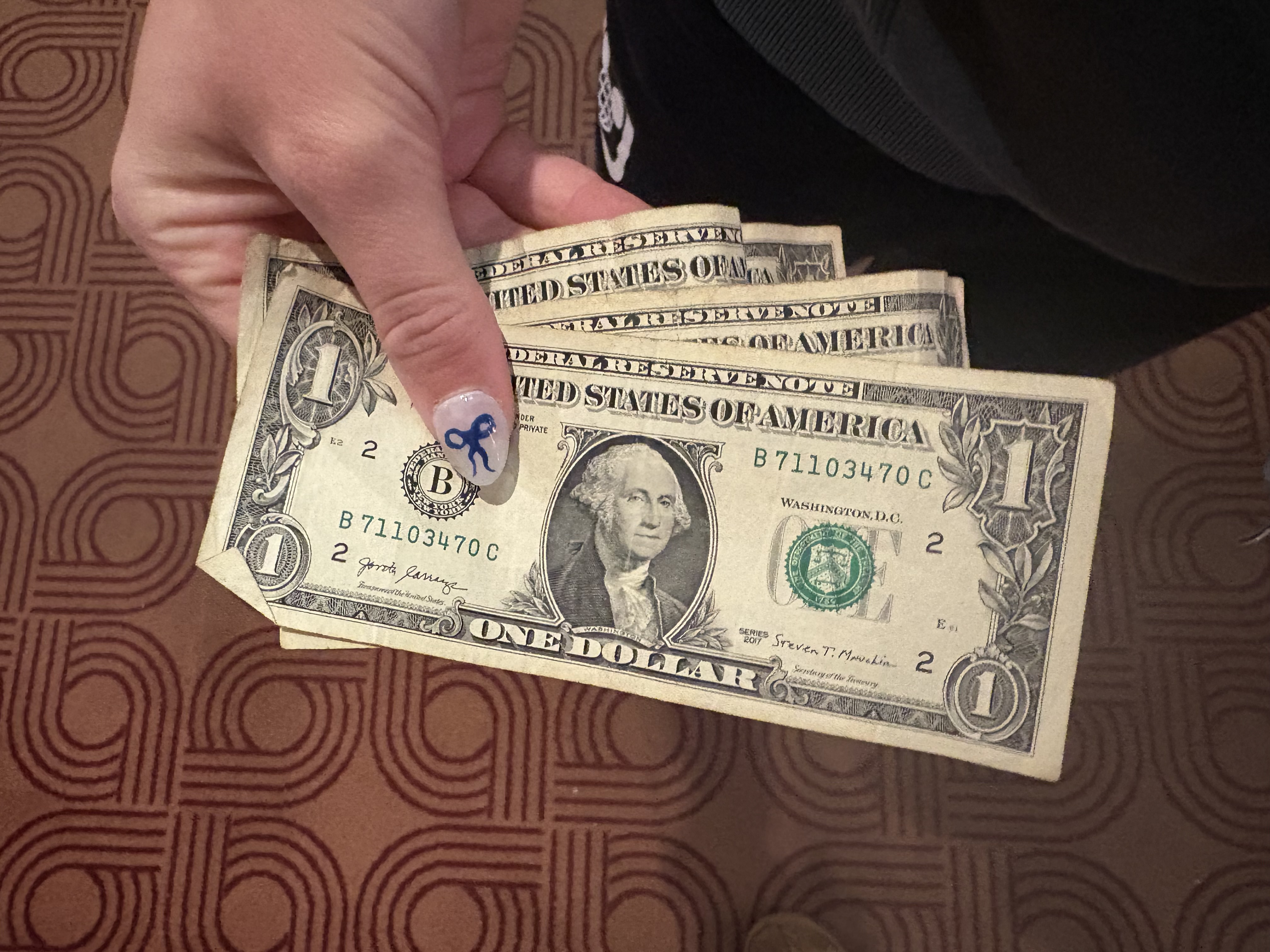
Three dollars found in pocket.
Photo courtesy of Leah Anson
BY: LEAH ANSON, OPINION WRITER
Money — what every college student needs. The instant excitement of finding a dollar on the ground or in an unexpected coat pocket is scientifically proven to boost someone’s mood. So, what specifically does finding money trigger in the brain? The answer: dopamine — the brain’s “feel-good” chemical.
Dopamine is a specific neurotransmitter that can be triggered by motivation, rewards, emotional regulation, etc. So, when I found three bucks in my coat pocket, a rush of dopamine flooded my brain. As a college student, a little extra cash is always helpful; however, I thought about how I could spend it — or even better, where I could spend it. Even though it’s three bucks, it’s two dollars away from a five-dollar McChicken meal deal or a Pepsi and a snack out of the vending machine.
Spending money feels so great because of the anticipation and the reward that comes from finding a surprise. It’s the instant rush that hooks us. According to The Psychology of Spending: Dopamine and Money, “Your brain remembers the rush, not the regret.” Whether we regret spending money, or not, it is the thrill of the purchase that keeps us coming back. Most of the time, the things I spend money on, I don’t necessarily need–like that burrito from Chipotle or that shirt from Marshalls. However, that initial excitement keeps me addicted. But the excitement of spending has chemically trained my brain to crave the next purchase, to chase that next little high.
The downside to this dopamine rush is how easily it can spiral into unhealthy spending habits. According to How Brain Chemistry Affects Your Spending and Saving Habits, “Unexpected purchases trigger dopamine surges, encouraging impulsive buying.” On-line shopping is a leading cause of impulsive buying. Shopping online is easy and can be done fast. While it may seem convenient, it could lead to an addiction in the long run.
Dopamine is a “feel-good” drug that has its ups and downs. While this trigger of excitement is hard-wired into the brain, it’s important to distinguish impulsive buying and simply the excitement of a singular purchase. Learning to save money is a great way to offset the chemical reaction that occurs. Another great way to save money is to put money in coat pockets and forget about it. Then, a year later, when you find it again, you’ll get that same thrill — a simple, satisfying cycle.